Paid albums on a free-music habit
- Problem
- QQ Music had taught users that music online was free. The constraint was habit, not checkout.
- Solution
- Digital Album as paid ownership — serial numbers, gifts, leaderboard status — without breaking the listening loop.
- Result
- ~$5M revenue in the launch year. I ran it as its product manager.
Role
Product manager, Digital Album
- A PM role, not a design credit — I ran the loop from research to standardization.
Scale & window
2011–2015, 100M-user platform
- Consumer scale at Tencent, where I started.
Result
~$5M revenue in the launch year
- Paid ownership — serial numbers, gifts, status — on a habit trained for free.
For nearly a decade, QQ Music taught users that music online was free. As Digital Album's product manager, I ran the bet that ownership — serial numbers, gifts, leaderboard status — could feel as natural as free streaming already did.
Earning a place in the habit
We ran the work as a tight product loop: validate fan intent, shape the offer, ship, listen, standardize what worked. Speed mattered because user expectations around free music were already entrenched — every release had to earn its place in a routine built around free music.
Iteration closes the loop — feedback from live usage feeds directly back into design, keeping the product current as fan behavior shifts.
What fans actually wanted
We focused research on the users most likely to pay: people already investing identity in an artist. What they wanted wasn't a transaction — it was to be close to the artist, to be seen supporting them, and to belong among other fans. Five needs kept coming back:
- Know more about the singer
- Create an image as a fan
- Gain recognition
- Make contributions to the idol
- Connect with other fans
What fans could buy
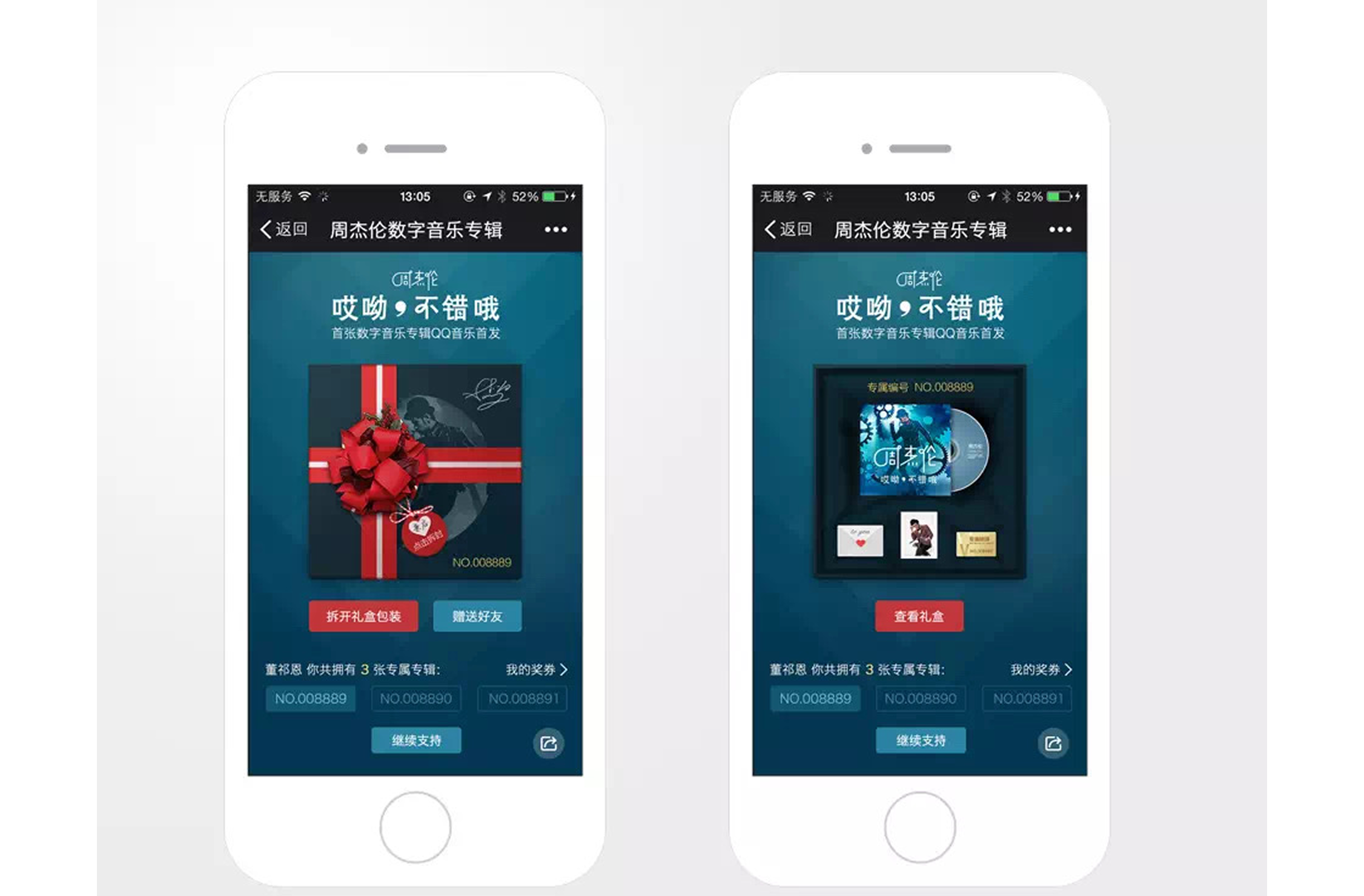
We turned those needs into four purchasable pieces, each borrowed from physical music culture people already understood. Casual listeners needed to notice the album existed; fans needed a reason to buy; super fans needed a reason to compete and share.
Album
Reframe the stream as a collectible object — something you own, not something you borrow.
Gifts
Borrow the emotional logic of lyric books and merch: digital goods that feel personal and giftable.
Serial No.
Inject scarcity and proof of ownership — the emotional weight physical albums carried into a digital shelf.
Leaderboard
Turn purchase into performance. Super fans compete on the leaderboard, rank, and pull other fans in.
Mapping the product surface
Each of the four pieces got its own screen in the app — meeting people where they were, from first hearing about the album to buying it again as a gift.
 View full size
Where it landed
Digital Album shipped and contributed ~$5M in revenue in its first year — paid for by users who had spent almost a decade learning that music online was free.