A working console for an AI-operated platform
- Problem
- The strategic question — what do we look like when AI operates the platform — was being answered with decks.
- Solution
- A working console: money spine visible, identity verification (KYC) as a conversation, a co-pilot that proposes. Nothing acts without a click.
- Result
- Vision demo for internal alignment. Synthetic data. 41 of 41 assertions on the co-pilot. Not a production rollout.
Role & team
Strategy, design and build — solo
- Owned the strategy, designed the console, and coded the front end by directing AI coding agents.
- Three repositories, running end to end.
Status
Vision demo for internal alignment
- The seller, her products and every number on screen are synthetic.
- Stakeholders click through the whole story rather than reading a deck.
Receipts
41 of 41 assertions on the co-pilot
- The AI suggests; the seller decides. Nothing acts without a click.
Every platform is asking the same question right now: what do we look like when AI agents do the operating? At ablefy, a creator-commerce platform, I built the answer as software — a console demo where the platform's backbone (checkout, invoicing and VAT as merchant of record, payouts, verification) runs underneath a constellation of seller products, with an AI co-pilot on top that watches everything and proposes the next move.
I owned the strategy and led the build across three repositories, designing the console and coding its front end by directing AI coding agents. This is a vision demo for internal alignment: the seller, her products and every number on screen are synthetic. It runs end to end, so stakeholders could click through the whole story.
Where the co-pilot's authority stops, and where its numbers come from:
- The AI suggests; the seller decides. Every suggestion is labeled as a suggestion, and nothing acts without a click.
- Money logic stays deterministic and visible — orders, VAT and payouts reconcile on screen, not in a footnote.
One backbone, a constellation of products
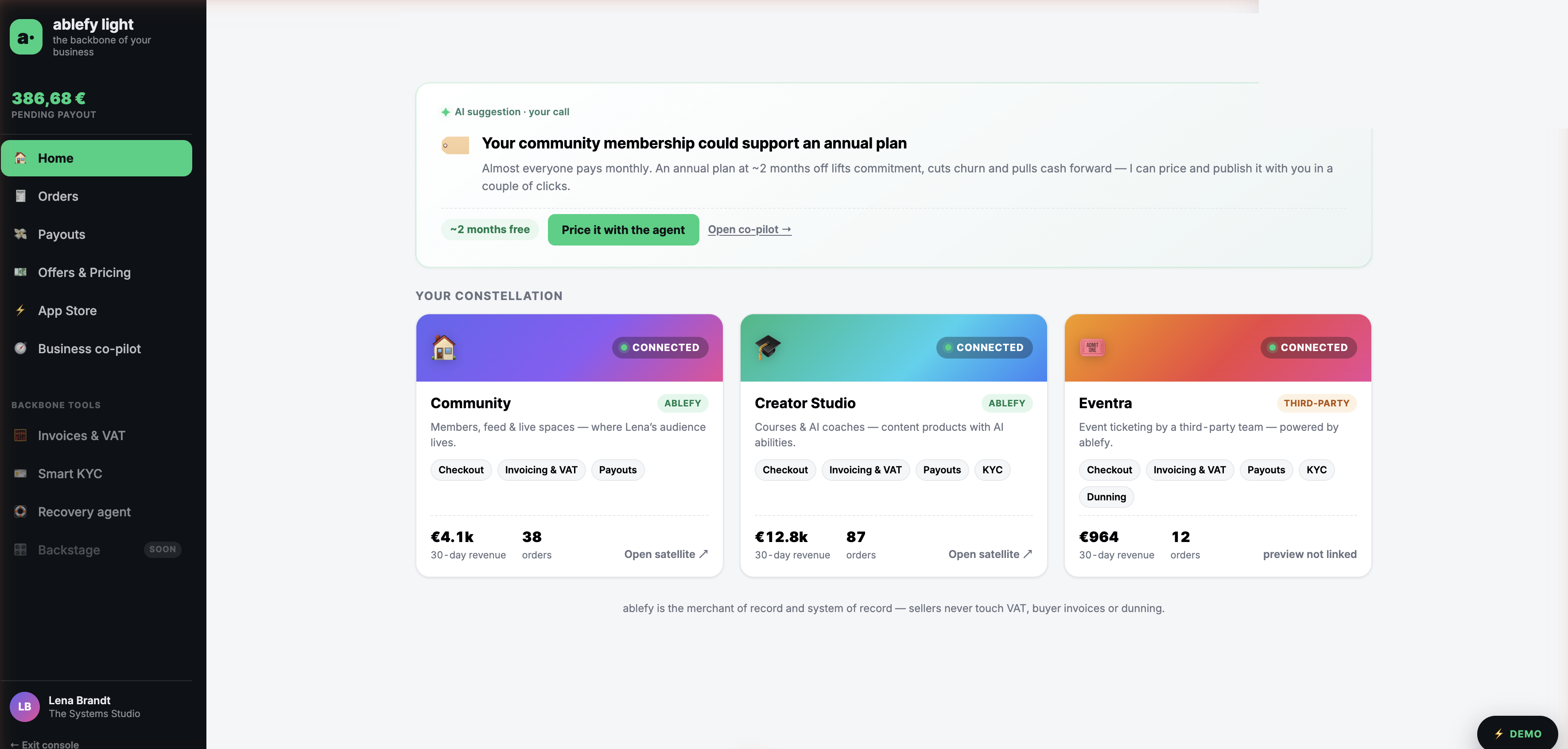
The core reframe: the platform isn't one app, it's the backbone under many. A seller's community, course studio, and even a third-party ticketing product all connect as satellites — each one borrowing checkout, invoicing & VAT, payouts and KYC from the backbone. The console is the seller's one place: pending payout at the top left, satellites with their revenue at the center, and the co-pilot's current suggestion above the fold.
 View full size
The money spine, end to end
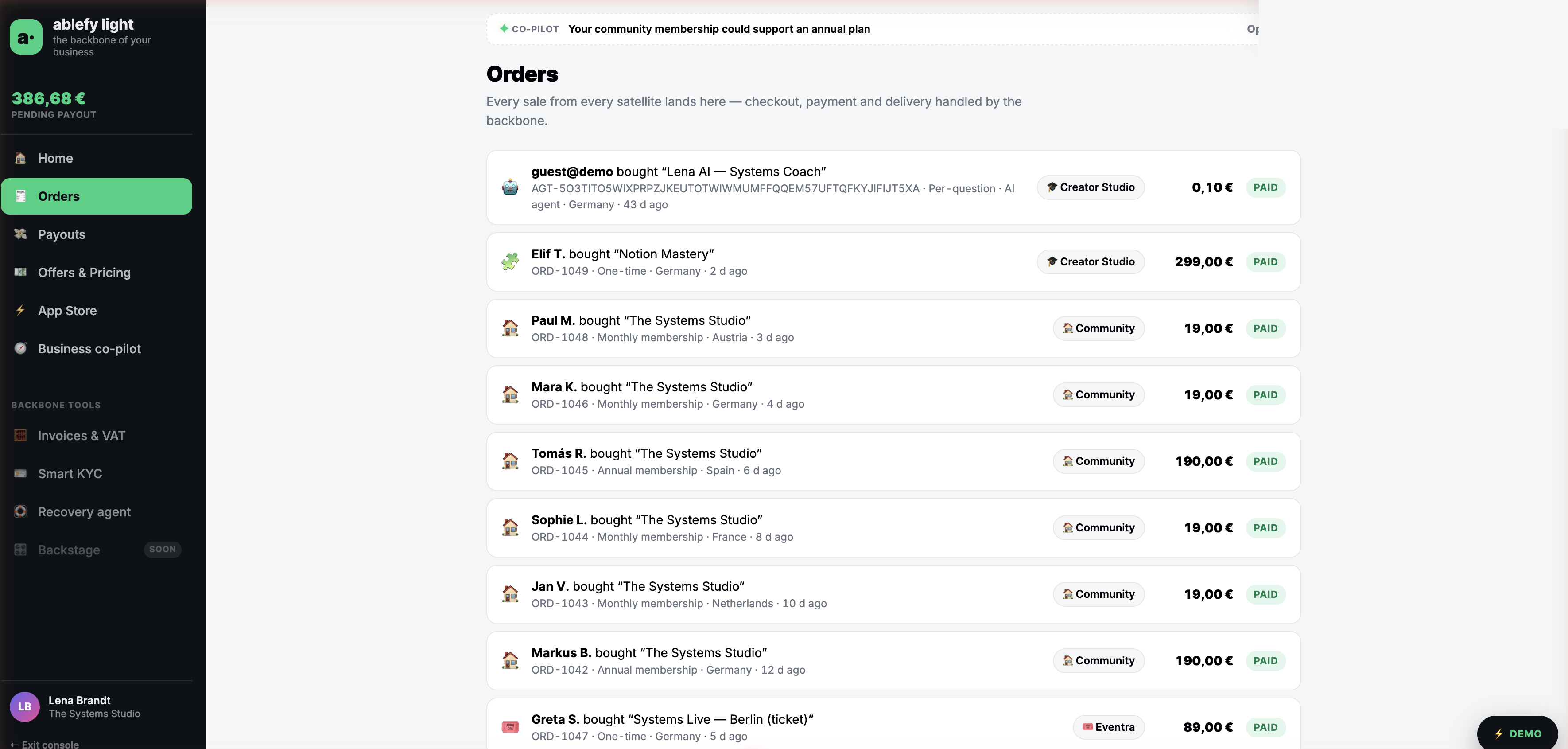
The most future-facing order in the demo costs €0.10: an AI agent buying a per-question consult on a buyer's behalf. It sits in the same orders feed as a €299 course sale because, to the backbone, agent commerce is just another order with the same invoice, VAT and payout obligations — every sale from every satellite lands in that one feed.
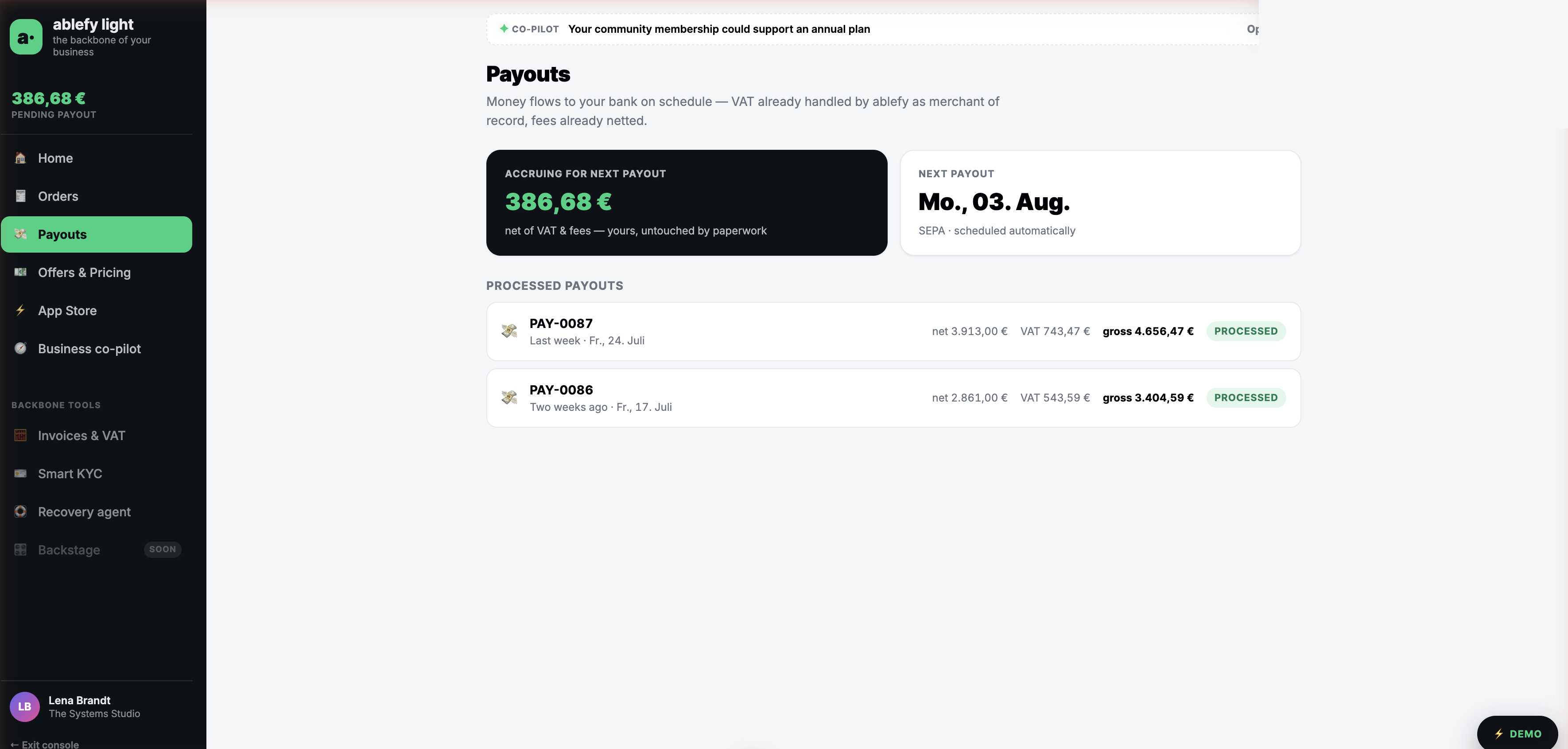
The payout view shows where the money actually is: what's accruing, when it pays out, and — line by line — net, VAT and gross for every processed payout. The platform is merchant of record — the legal seller toward the buyer — so the seller never touches VAT, buyer invoices or payment reminders.
 View full size
 View full size
Verification is a conversation, then a standing state
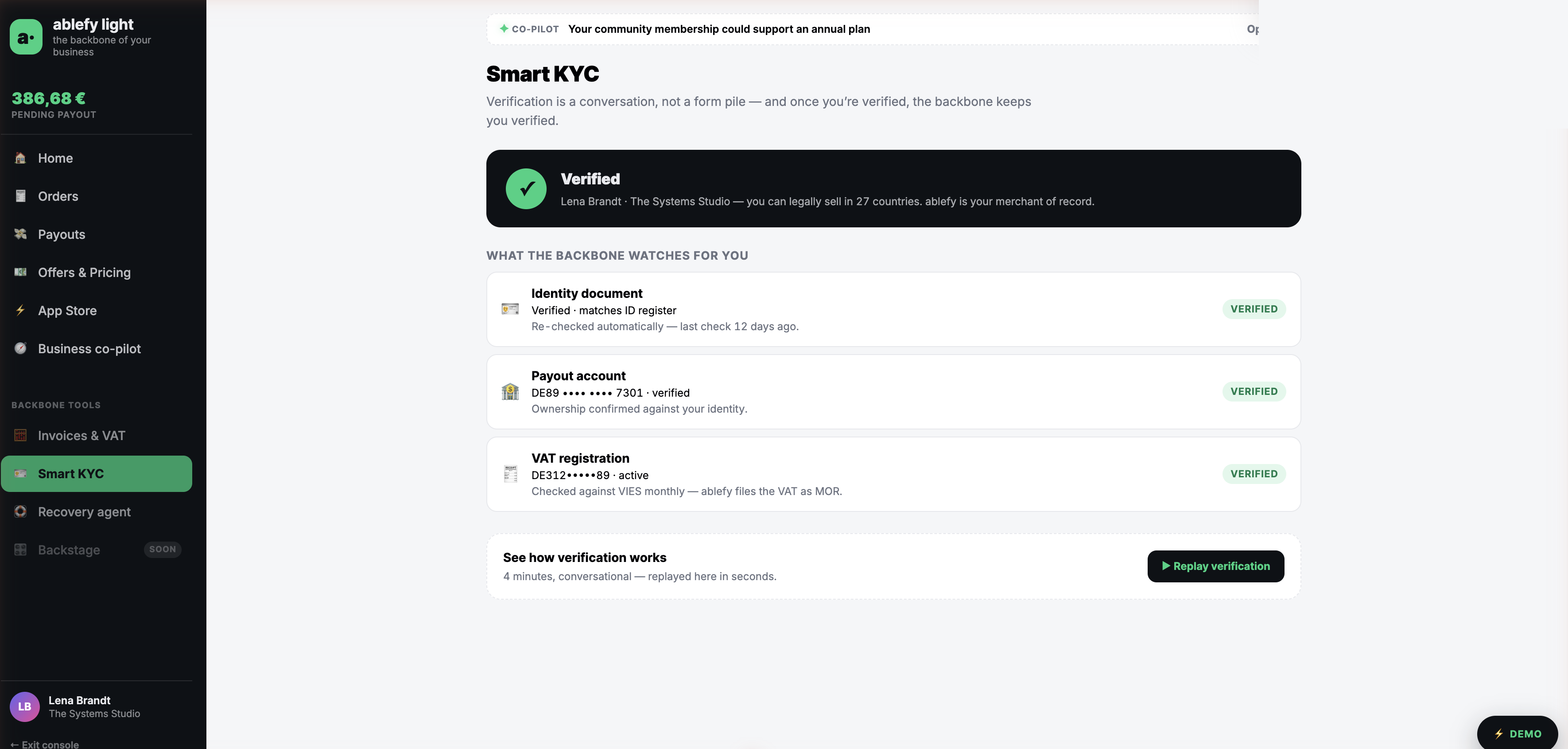
Compliance onboarding is where platforms lose sellers. The demo reframes KYC twice: getting verified is a conversation with an agent instead of a form pile, and staying verified is the backbone's job — identity document, payout account and VAT registration are watched and re-checked automatically.
 View full size
The co-pilot proposes moves the seller approves
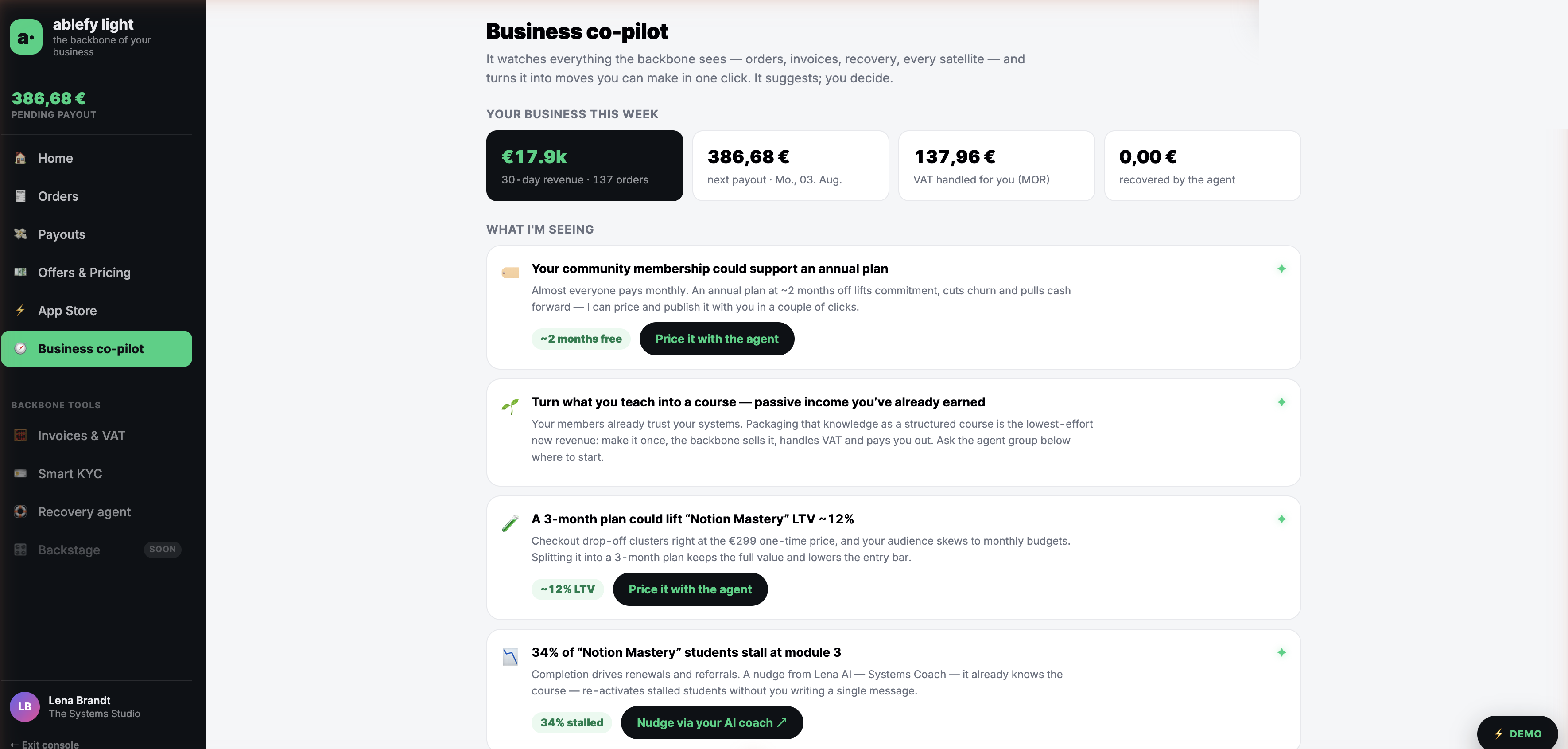
The co-pilot watches everything the backbone sees — orders, invoices, recovery, every satellite — and turns it into moves the seller can make in one click: an annual plan that would cut churn, a course that would package existing knowledge, a payment plan that would lift a product's lifetime value, a nudge for students stalling at module three. Every card carries its reason and its money consequence, and every action routes into the same tools the seller could have used by hand.
The design rule carried over from my other AI work: the model proposes, the seller stays the decision-maker, and the numbers on the card come from the deterministic backbone.
 View full size
Where it stands
A vision demo for internal alignment, not a production rollout. It shipped as three tickets merged via pull requests, and the co-pilot's logic is held by 41 of 41 automated assertions. The demo runs end to end — console, community satellite, agent-payment layer.
What came of it: the backbone framing gave the platform's agentic direction a concrete, criticizable shape.